I know what it’s like to look successful. And feel trapped by money.
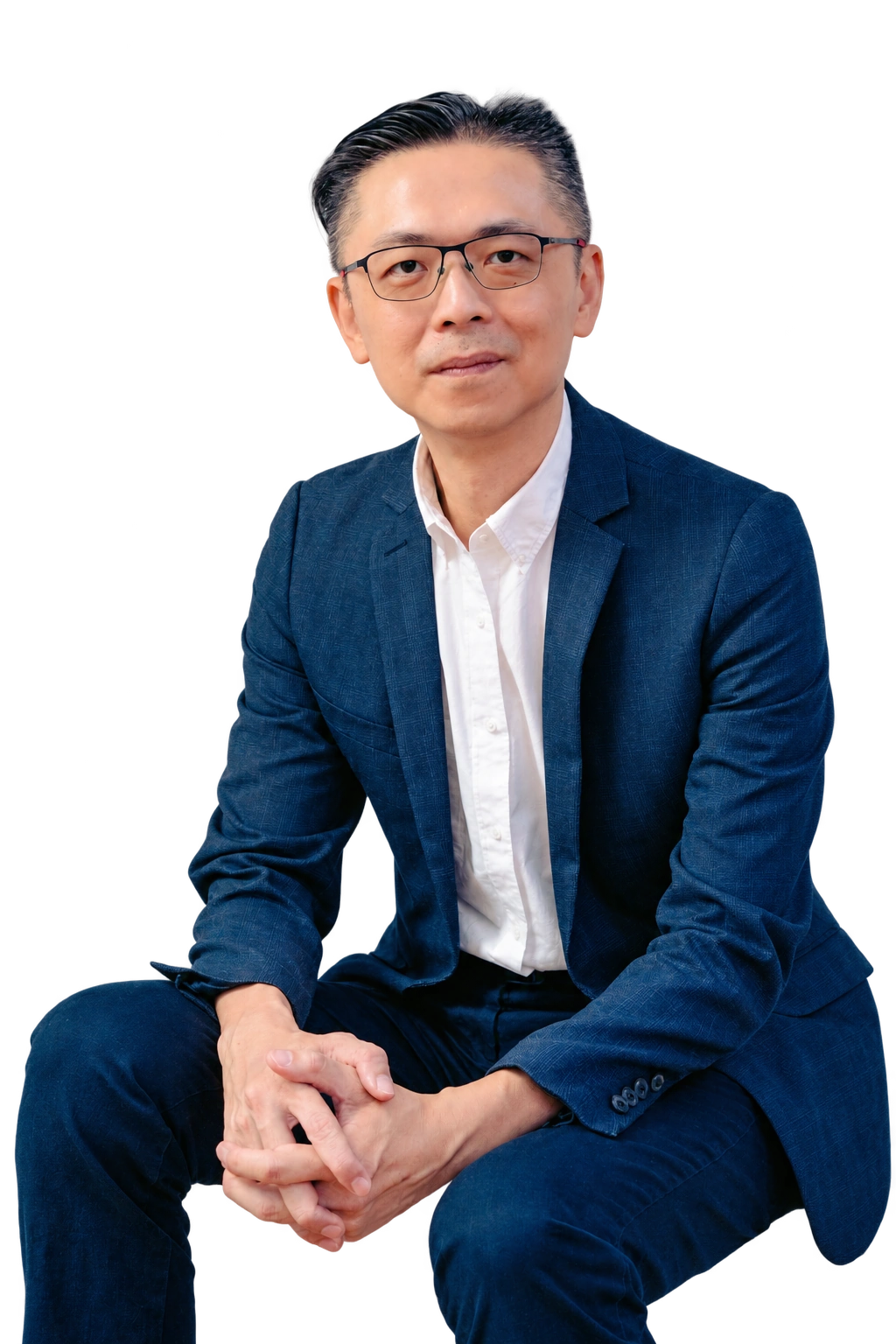
I’m Ka Hoe, founder of JA. I help high-income individuals understand their debt, face their monthly deficit and work towards a more sustainable financial life.
My approach was shaped by three financial crises of my own.
Ka HoeFounder of JA · Financial Transformation Coach
I want to tell you the part of my story that is harder to share.
Because when you have a good income, people often assume you must be doing well. You may assume it too. Until the repayments, family responsibilities and commitments leave you wondering how you will get through the next month.
I have been there. My story includes a banking career, property investments and a restaurant business. It also includes mistakes, fear and the people who helped me find my way forward.
Sharing what I have learned.There is a personal story behind the work I do today.Why I tell the whole story.I share the difficult parts too, so others can learn from my mistakes.Crisis 01 · Career & family
A stable job. Two housing loans. A lot I couldn’t say.
In 2005, I was an IT professional working in a bank. I was an Assistant Manager, leading a RM2 million project with a team of ten, including people more senior than me.
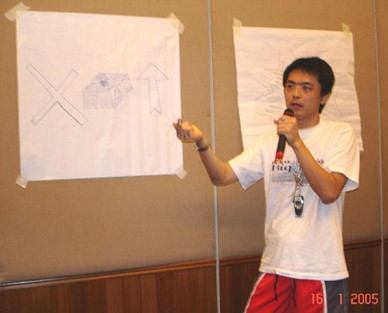
An earlier chapter — 2005.I was learning that understanding people mattered as much as understanding the numbers.
On paper, it looked like progress. Inside, I felt overwhelmed. I struggled to communicate with my bosses, my team and my peers. I could see the project heading into trouble and felt helpless.
I had bought my first property at 21 and another at 22 with my then girlfriend, who is now my wife. By 2005, she was pregnant with our first son. The thought of losing my job while carrying two housing loans frightened me.
My father’s support gave me the courage to leave. I began learning about money and exploring a different career. But looking back, I can also see how much I needed help communicating and asking for support.
Crisis 02 · Property & cashflow
I grew my income. Then I grew my commitments faster.
I entered the insurance industry because I was good with numbers and wanted to help people with financial planning. The first year was difficult: my monthly income fell from RM5,000 to RM2,000. Within three years, it had grown to five figures.
I was proud of how far I had come.Then comparison pushed me to move faster.
I bought a property a year from 2010 to 2012. Then I started comparing my progress with other investors. I wanted to move faster.
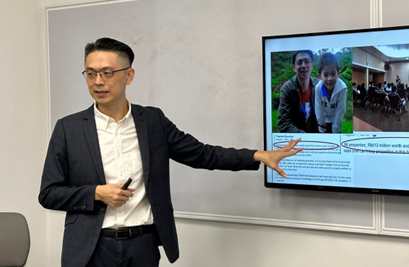
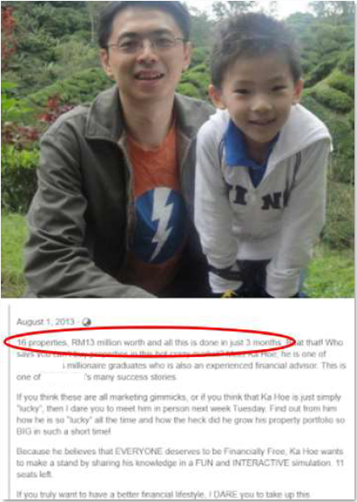
Behind the investments, I was also building a family.An old post with my son, from the property-investing years.
Through joint ventures, shared arrangements and company partnerships, I became involved in buying 16 properties in three months. I was chasing a financial freedom number and paying too little attention to the risks.
When the property market slowed in 2015, the pressure became real.
RM40,000Monthly instalments and maintenance across the property portfolio
RM28,000Monthly rental income from that portfolio
These are historical portfolio figures from my original story, involving shared investment arrangements. The RM12,000 gap is the portfolio shortfall, rather than my individual share.
Having assets on paper did not mean I had enough cash each month.
I had focused on how many properties I could buy. I needed to ask whether the whole arrangement could sustain itself when things became difficult.
Crisis 03 · Business & pressure
I tried to solve a cashflow problem by adding another business.
In 2015, I was also moving from insurance into financial planning. I became a Registered Financial Planner under the Malaysian Financial Planning Council. At the same time, I invested in a restaurant, thinking it would bring in the cashflow I needed.
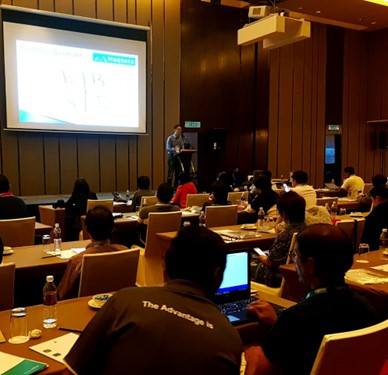
Still learning. Still sharing.My move into financial planning happened while other commitments were putting pressure on me.
Instead, it drained more resources. I put in another RM200,000 trying to keep it going.
Life beyond the balance sheet.A personal photo kept from my original story.
There is one moment I still remember clearly. I did not have enough money to buy lunch for my children. I searched the coinbox in my car to put enough together.
That moment stays with me because it shows how far apart an outside image and a private reality can be. I had been working hard. I had investments. Yet I was struggling with something as basic as lunch for my children.
The turning point
I had to understand more than the numbers.
In 2018, learning about communication and different personalities helped me understand myself and the people around me better. I began to see how emotions, comparison and the way I made decisions had contributed to my problems.
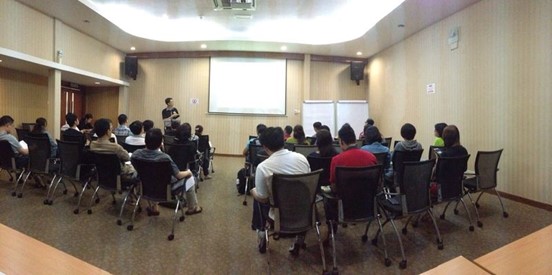
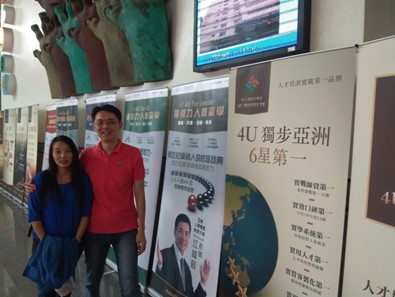
Learning to connect with people.Communication became an important part of my turning point.
During the COVID period, I started J Advisory and shared what I was learning through articles, case studies and financial education.
Today, that work continues through JA. My focus is on high-income individuals who are under pressure from debt and monthly deficits: people who earn well, carry responsibilities and want to make a clear decision about what comes next.
I bring my experience in financial planning, coaching and my own financial setbacks to that conversation. We look at income, commitments, assets and the monthly gap together. We also talk about the decisions and pressures behind them.
Outside work, I am a husband and father of three. We are NBA fans and enjoy watching games together. Those ordinary moments remind me why having a healthier relationship with money matters.
If some of this sounds familiar…
You do not need to have every answer before taking a closer look. Start by understanding where your money goes, what is putting pressure on you and which decisions deserve attention first.
Keep reading
Good income. Still running short?
My personal story explains why I do this work. My articles explore the money problems that can be difficult to see from the outside.